 by
by Discover how 5S Lean Management improves workplace organization, productivity, safety, and efficiency. Learn the five pillars of 5S, implementation strategies, benefits, examples, and FAQs.
5S Lean Management: The Complete Guide to Workplace Organization and Continuous Improvement
In today’s competitive manufacturing and business environment, organizations constantly seek ways to improve productivity, reduce waste, and create safer workplaces. One of the most effective methods for achieving these goals is 5S Lean Management.
Originally developed in Japan and widely adopted through the Toyota Production System, the 5S methodology has become a global standard for workplace organization and operational excellence. Companies across industries use 5S to streamline workflows, improve efficiency, reduce operational costs, and create a culture of continuous improvement.
Whether you work in manufacturing, warehousing, healthcare, logistics, or office administration, implementing 5S principles can significantly enhance workplace performance.
In this comprehensive guide, you’ll learn:
- What 5S Lean Management is
- The five pillars of the 5S methodology
- The Red Tag system and its benefits
- Advantages of implementing 5S
- Practical implementation strategies
- Common challenges and solutions
- Frequently asked questions about 5S
Let’s explore how 5S can help transform workplace efficiency and productivity.
What is 5S Lean Management?
5S Lean Management is a workplace organization methodology designed to create a clean, efficient, and highly productive work environment. The system focuses on eliminating unnecessary items, organizing resources effectively, maintaining cleanliness, establishing standards, and sustaining improvements over time.
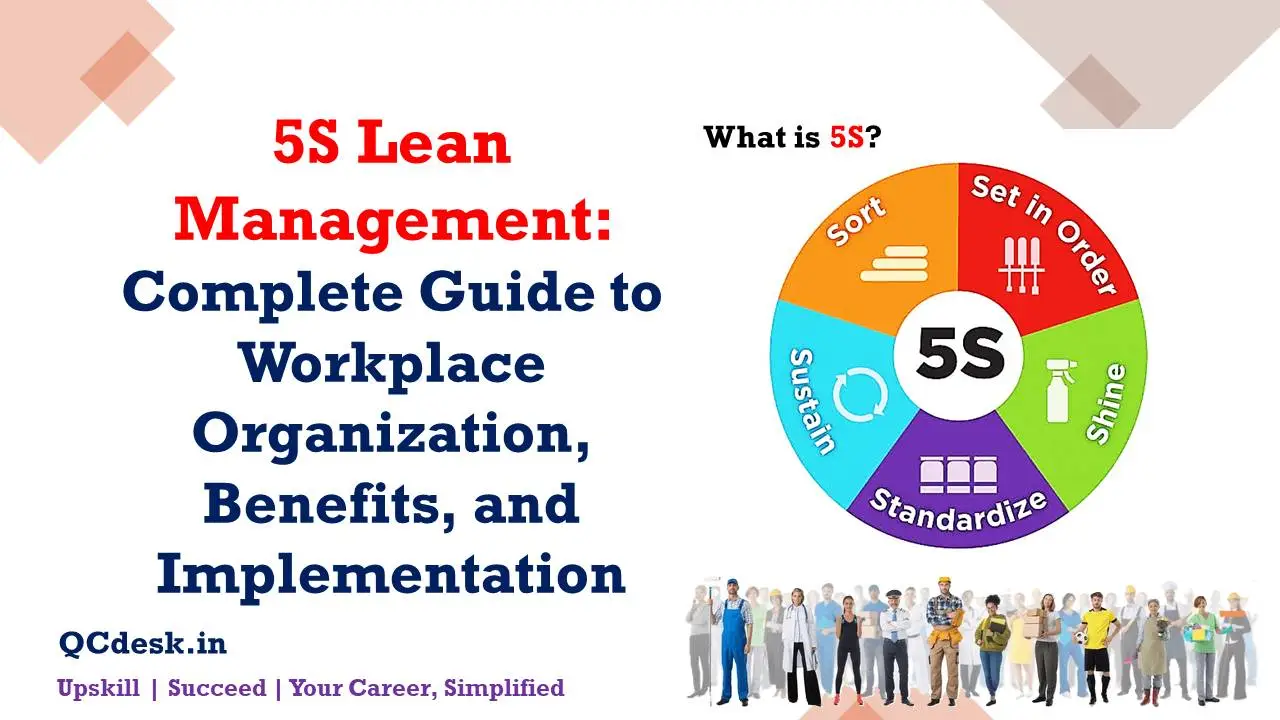
The term “5S” originates from five Japanese words that represent the core principles of workplace organization:
1. Sort (Seiri)
Remove unnecessary items from the workplace.
2. Set in Order (Seiton)
Arrange tools, equipment, and materials for easy access and efficient workflow.
3. Shine (Seiso)
Maintain cleanliness and inspect work areas regularly.
4. Standardize (Seiketsu)
Develop procedures and standards to maintain consistency.
5. Sustain (Shitsuke)
Build discipline and continuous improvement into daily operations.
Together, these five principles create an organized environment that supports productivity, quality, and safety.
Why is 5S Important?
Many organizations struggle with workplace inefficiencies that directly impact productivity and profitability.
Common workplace issues include:
- Cluttered workstations
- Time wasted searching for tools and materials
- Production delays and errors
- Inefficient use of workspace
- Increased safety risks
- Lack of process consistency
5S addresses these challenges by creating a structured and visually organized workplace where employees can perform their tasks efficiently and safely.
The result is improved operational performance, reduced waste, and enhanced employee engagement.
Understanding the Five Steps of 5S Lean Management
1. Sort (Seiri) – Remove What Isn’t Needed
The first step focuses on identifying and eliminating unnecessary items from the workplace.
Over time, organizations accumulate obsolete equipment, excess inventory, outdated documents, and unused materials. These items consume valuable space and reduce efficiency.
Key Activities
- Identify frequently used and rarely used items
- Remove unnecessary tools and equipment
- Eliminate obsolete inventory
- Dispose of damaged or unusable materials
- Free up valuable workspace
A well-executed sorting process creates a cleaner, safer, and more productive environment.
The Red Tag Method: A Powerful Sorting Tool
One of the most widely used techniques in the Sort phase is the Red Tag Method.
This process helps organizations identify items that may no longer be necessary for daily operations.
How the Red Tag Method Works
Items that appear unnecessary are marked with a red tag containing information such as:
- Item description
- Tagging date
- Department responsible
- Reason for tagging
- Recommended action
These tagged items are moved to a designated holding area for evaluation.
Implementation Steps
Step 1: Establish a Red Tag Area
Create a temporary location where tagged items can be stored for review.
Step 2: Conduct a Workplace Inspection
Review equipment, tools, materials, and supplies to determine their necessity.
Step 3: Tag Questionable Items
Apply red tags to items that are rarely used or no longer required.
Step 4: Evaluate Usage
Monitor whether the item is needed during a predetermined review period.
Step 5: Take Action
Based on the evaluation:
- Reassign useful items
- Store infrequently used equipment
- Dispose of obsolete materials
- Recycle where possible
Benefits of the Red Tag Method
- Reduces workplace clutter
- Improves space utilization
- Enhances productivity
- Improves safety conditions
- Supports cost reduction initiatives
Organizations often discover significant amounts of unused inventory and equipment through this simple process.
2. Set in Order (Seiton) – Organize for Maximum Efficiency
Once unnecessary items are removed, the next step is organizing what remains.
The objective is simple: every item should have a designated location, and every employee should know where to find it.
Key Activities
- Assign permanent storage locations
- Use labels and visual identification systems
- Implement shadow boards for tools
- Organize materials based on frequency of use
- Create clear pathways and work zones
When tools and materials are easy to locate, employees spend less time searching and more time performing value-added work.
3. Shine (Seiso) – Create a Clean and Safe Workplace
A clean workplace is essential for productivity, quality, and safety.
The Shine phase involves routine cleaning, inspection, and maintenance activities that help identify potential issues before they become serious problems.
Key Activities
- Perform daily cleaning routines
- Inspect equipment during cleaning
- Remove dirt, dust, and debris
- Maintain machines and workstations
- Address abnormalities immediately
Regular cleaning helps prevent equipment failures, reduces downtime, and improves employee morale.
4. Standardize (Seiketsu) – Establish Consistent Practices
After implementing the first three steps, organizations must create standards to maintain improvements.
Without standardization, workplaces often return to their previous state.
Key Activities
- Develop visual work instructions
- Create cleaning schedules
- Implement workplace checklists
- Define responsibilities
- Conduct routine audits
Standardization ensures consistency across departments and shifts while reinforcing best practices.
5. Sustain (Shitsuke) – Build a Culture of Continuous Improvement
The final step focuses on making 5S a permanent part of the organization’s culture.
Sustain is often considered the most challenging phase because it requires long-term commitment and discipline.
Key Activities
- Conduct regular 5S audits
- Provide ongoing employee training
- Encourage continuous improvement suggestions
- Recognize high-performing teams
- Monitor workplace performance metrics
Organizations that successfully sustain 5S create a culture where workplace organization becomes a natural part of daily operations.
Major Benefits of 5S Lean Management
Implementing 5S delivers significant operational and financial benefits.
Increased Productivity
Employees spend less time searching for tools, documents, and materials.
Reduced Waste
Eliminating unnecessary items reduces excess inventory and inefficiencies.
Improved Workplace Safety
Organized workspaces reduce accidents, trips, falls, and other hazards.
Better Quality Control
Clean and standardized work environments minimize errors and defects.
Enhanced Employee Engagement
Employees take greater ownership of their work areas and processes.
Improved Space Utilization
Organizations maximize available workspace and storage capacity.
Lower Operating Costs
Reduced waste, downtime, and inefficiencies contribute to significant cost savings.
Common Challenges in 5S Implementation
Even though 5S is simple in concept, organizations may encounter obstacles during implementation.
Resistance to Change
Employees may be reluctant to adopt new workplace practices.
Solution
Provide training, communicate benefits clearly, and involve employees in the implementation process.
Lack of Management Support
Without leadership commitment, 5S initiatives often lose momentum.
Solution
Ensure management actively participates in audits, reviews, and improvement activities.
Difficulty Maintaining Standards
Many organizations achieve initial success but struggle to sustain improvements.
Solution
Implement regular audits, performance reviews, and recognition programs.
Inconsistent Employee Participation
Uneven involvement can limit overall effectiveness.
Solution
Assign responsibilities clearly and encourage team ownership of workplace organization.
How to Successfully Implement 5S in Your Organization
For successful implementation, follow a structured approach:
Step 1: Educate Employees
Provide comprehensive 5S awareness and training programs.
Step 2: Form a 5S Team
Assign coordinators and improvement champions.
Step 3: Conduct a Workplace Assessment
Identify improvement opportunities and prioritize actions.
Step 4: Implement the Five Steps
Execute Sort, Set in Order, Shine, Standardize, and Sustain systematically.
Step 5: Measure Results
Track productivity, quality, safety, and cost improvements.
Step 6: Perform Regular Audits
Monitor compliance and identify additional improvement opportunities.
Step 7: Integrate Continuous Improvement
Combine 5S with Kaizen and Lean Manufacturing initiatives for long-term operational excellence.
Frequently Asked Questions (FAQs)
What does 5S stand for?
5S stands for Sort, Set in Order, Shine, Standardize, and Sustain.
Is 5S only used in manufacturing?
No. While it originated in manufacturing, 5S is widely used in offices, hospitals, warehouses, logistics centers, laboratories, and service industries.
What is the primary objective of 5S Lean Management?
The main objective is to create a clean, organized, efficient, and safe workplace while eliminating waste and improving productivity.
What is the Red Tag Method?
The Red Tag Method is a workplace organization technique used to identify and remove unnecessary items from work areas.
How often should 5S audits be conducted?
Most organizations perform weekly or monthly audits to ensure compliance and maintain improvements.
What is the relationship between 5S and Lean Manufacturing?
5S is one of the foundational tools of Lean Manufacturing and supports waste reduction, process efficiency, and continuous improvement.
5S Lean Management is much more than a workplace cleaning program. It is a proven system for improving productivity, reducing waste, enhancing safety, and building a culture of continuous improvement.
By implementing the five pillars—Sort, Set in Order, Shine, Standardize, and Sustain—organizations can create highly efficient work environments that support long-term operational excellence.
Whether you’re managing a manufacturing facility, warehouse, office, or service operation, 5S provides a practical framework for achieving better performance, higher employee engagement, and sustainable business growth.