 by
by Learn Statistical Process Control (SPC), its tools, benefits, implementation steps, Control Charts, Histograms, Pareto Charts, Fishbone Diagrams, Scatter Plots, and Process Capability Analysis (Cp & Cpk).
Statistical Process Control (SPC): A Complete Guide for Quality Professionals
In today’s highly competitive manufacturing environment, maintaining consistent product quality is critical for business success. Organizations must continuously monitor their production processes to reduce defects, improve efficiency, and meet customer expectations.
One of the most effective methods for achieving these goals is Statistical Process Control (SPC).
SPC is a data-driven quality management approach that uses statistical techniques to monitor process performance, identify variations, and prevent defects before they occur. Rather than relying solely on final inspections, SPC focuses on controlling the process itself, ensuring products consistently meet specifications.
Industries such as automotive, aerospace, electronics, pharmaceuticals, and consumer goods widely use SPC as part of their quality management systems. It is also a key requirement in standards like IATF 16949, ISO 9001, Lean Manufacturing, and Six Sigma.
This comprehensive guide explains SPC concepts, tools, implementation methods, and best practices to help organizations achieve operational excellence.
What is Statistical Process Control (SPC)?
Statistical Process Control (SPC) is a quality control methodology that uses statistical techniques to monitor, analyze, and improve process performance.
The primary objective of SPC is to distinguish between normal process variation and unusual variation that may indicate a problem.
By identifying issues early, organizations can take corrective action before defects reach customers, reducing waste, rework, and production costs.
Objectives of SPC
- Improve process consistency
- Reduce process variation
- Prevent defects and non-conformities
- Enhance product quality
- Support continuous improvement initiatives
- Increase customer satisfaction
Why is SPC Important?
Many manufacturing processes experience variation due to equipment, materials, operators, environmental conditions, and measurement systems.
Without proper monitoring, these variations can lead to:
- Product defects
- Customer complaints
- Increased scrap and rework
- Higher production costs
- Delivery delays
SPC helps organizations detect these issues early and maintain process stability.
Benefits of SPC
✔ Reduces process variability
✔ Improves product consistency
✔ Minimizes scrap and rework
✔ Enhances productivity
✔ Supports regulatory compliance
✔ Strengthens customer confidence
✔ Promotes data-driven decision-making
Key Tools Used in Statistical Process Control
SPC relies on several analytical tools to monitor and improve process performance.
The most commonly used tools include:
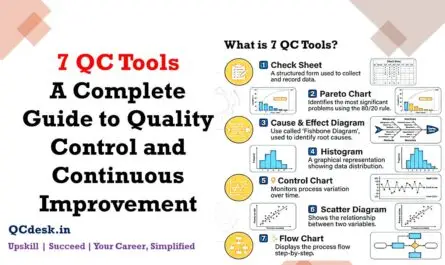
- Control Charts
- Histograms
- Pareto Charts
- Fishbone Diagrams
- Scatter Diagrams
- Process Capability Analysis (Cp and Cpk)
Let’s explore each tool in detail.
1. Control Charts
What Are Control Charts?
Control Charts are graphical tools used to track process performance over time. They help determine whether a process is operating within expected limits or if corrective action is needed.
A control chart contains:
- Center Line (Process Average)
- Upper Control Limit (UCL)
- Lower Control Limit (LCL)
Data points plotted between the limits generally indicate a stable process, while unusual patterns may signal potential issues.
Why Control Charts Matter
Control charts help organizations:
- Detect process instability
- Identify trends and shifts
- Monitor ongoing process performance
- Reduce quality problems before they occur
Types of Control Charts
Variable Data Control Charts
Used when measurements are numerical.
X-Bar and R Chart
Monitors process averages and variation for small sample sizes.
X-Bar and S Chart
Suitable for larger sample groups.
Individual and Moving Range Chart (I-MR)
Tracks individual observations and variation.
Attribute Data Control Charts
Used for count-based data.
P Chart
Monitors defective percentages.
NP Chart
Tracks the number of defective units.
C Chart
Measures defect counts per unit.
U Chart
Monitors defects when sample sizes vary.
Example
A machining process measures shaft diameters every hour. If data points remain within control limits, the process is stable. If points exceed limits or display unusual patterns, corrective action is required.
2. Histograms
What is a Histogram?
A Histogram is a graphical representation of data distribution that shows how frequently values occur within specified ranges.
Histograms help quality teams understand process behavior and variation.
Why Histograms Are Important
Histograms provide insights into:
- Process variation
- Data distribution
- Process consistency
- Potential quality issues
They are widely used in Lean Manufacturing and Six Sigma projects.
Components of a Histogram
Bins
Grouped intervals of data values.
Frequency
Number of observations within each interval.
X-Axis
Measurement values.
Y-Axis
Frequency of occurrence.
Common Histogram Shapes
Normal Distribution
Bell-shaped curve indicating a stable process.
Skewed Distribution
Indicates process shifts or imbalance.
Bimodal Distribution
Two peaks suggesting multiple process sources.
Uniform Distribution
Data spread evenly across the range.
Exponential Distribution
Often seen in failure or defect-related studies.
Example
A manufacturer analyzes product weights using a histogram. Most weights cluster around the target value, confirming process consistency.
3. Pareto Charts
What is a Pareto Chart?
A Pareto Chart is a visual tool that ranks problems according to frequency or impact.
It is based on the Pareto Principle, commonly known as the 80/20 Rule, which suggests that approximately 80% of problems originate from 20% of causes.
Why Use Pareto Analysis?
Organizations often have limited resources. Pareto Charts help prioritize improvement efforts by identifying the most significant issues first.
Components of a Pareto Chart
Bars
Represent categories of defects or problems.
Cumulative Percentage Line
Shows the combined impact of categories.
Example
A manufacturing plant tracks customer complaints and discovers that two defect types account for most complaints. By addressing these key issues, overall customer satisfaction improves significantly.
4. Fishbone Diagram (Cause-and-Effect Diagram)
What is a Fishbone Diagram?
The Fishbone Diagram, also known as the Ishikawa Diagram, is a root cause analysis tool used to identify potential causes of a problem.
Its structure resembles a fish skeleton, making it easy to organize causes into categories.
Purpose of Fishbone Analysis
The tool helps teams:
- Investigate quality issues
- Identify root causes
- Encourage collaborative problem-solving
- Support continuous improvement
Common Categories of Causes
People
Training, skills, experience, and human errors.
Machines
Equipment performance and maintenance issues.
Methods
Process procedures and work instructions.
Materials
Raw material quality and specifications.
Measurement
Inspection and measurement errors.
Environment
Temperature, humidity, lighting, and workplace conditions.
Example
A paint shop experiences frequent coating defects. Fishbone analysis identifies inadequate equipment cleaning as the primary root cause.
5. Scatter Diagram
What is a Scatter Diagram?
A Scatter Diagram is a graphical tool used to determine the relationship between two variables.
It helps identify whether one factor influences another.
Types of Correlation
Positive Correlation
Both variables increase together.
Negative Correlation
One variable increases while the other decreases.
No Correlation
No meaningful relationship exists.
Example
A manufacturer studies machine temperature and defect rates. The scatter plot reveals that higher temperatures are associated with more defects, prompting process adjustments.
Benefits of Scatter Diagrams
✔ Identifies cause-and-effect relationships
✔ Supports root cause investigations
✔ Improves decision-making
✔ Assists process optimization efforts
6. Process Capability Analysis (Cp and Cpk)
What is Process Capability?
Process Capability Analysis evaluates whether a process can consistently produce products within customer specifications.
The two most important capability indices are Cp and Cpk.
Understanding Cp (Process Capability Index)
Cp measures the potential capability of a process assuming it is perfectly centered.
Cp Formula
Cp = (USL − LSL) ÷ 6σ
Where:
- USL = Upper Specification Limit
- LSL = Lower Specification Limit
- σ = Standard Deviation
Cp Interpretation
Cp > 1.33
Process is generally capable.
Cp = 1.00
Process barely meets specifications.
Cp < 1.00
Process is incapable of consistently meeting requirements.
Understanding Cpk (Centered Process Capability)
Cpk measures actual process capability by considering both process variation and process centering.
Unlike Cp, Cpk reflects real-world performance.
Cpk Interpretation
Cpk > 1.33
Excellent process performance.
Cpk Between 1.00 and 1.33
Process is acceptable but may require monitoring.
Cpk < 1.00
Process improvement is necessary.
Difference Between Cp and Cpk
Cp evaluates potential capability.
Cpk evaluates actual capability.
When Cp is significantly higher than Cpk, it indicates that the process has sufficient capability but is not centered properly.
Example
Suppose:
- Upper Specification Limit = 10
- Lower Specification Limit = 6
- Process Mean = 7.8
- Standard Deviation = 0.5
The calculated Cp may indicate good capability, while Cpk reveals whether the process is centered within specifications.
This information helps quality teams decide whether to reduce variation or adjust process settings.
Types of Process Variation
Understanding variation is fundamental to SPC.
Common Cause Variation
Natural variation inherent within a stable process.
Examples include normal machine wear and minor material differences.
Special Cause Variation
Unexpected variation caused by abnormal conditions.
Examples include:
- Equipment failures
- Operator mistakes
- Incorrect machine settings
- Material defects
Special causes require immediate investigation and corrective action.
Steps to Implement SPC Successfully
Step 1: Identify Critical Process Characteristics
Determine which product or process parameters significantly impact quality.
Step 2: Select Appropriate SPC Tools
Choose the most suitable control charts and analysis techniques.
Step 3: Collect Reliable Data
Gather accurate and consistent process measurements.
Step 4: Analyze Process Performance
Monitor trends and identify unusual variation.
Step 5: Investigate Root Causes
Use Fishbone Diagrams, Pareto Analysis, and Scatter Plots to identify problems.
Step 6: Implement Corrective Actions
Eliminate root causes and improve process stability.
Step 7: Sustain Continuous Improvement
Review SPC data regularly and pursue ongoing optimization.
Advantages of Statistical Process Control
Organizations that implement SPC effectively experience significant benefits:
Improved Product Quality
Consistent monitoring reduces defects and variation.
Reduced Costs
Less scrap, rework, and warranty claims.
Higher Productivity
Stable processes operate more efficiently.
Better Compliance
Supports ISO 9001, IATF 16949, and customer requirements.
Increased Customer Satisfaction
Consistently high-quality products build trust and loyalty.
Applications of SPC Across Industries
SPC is widely used in:
Automotive Manufacturing
Monitoring dimensions, torque values, and assembly quality.
Aerospace
Ensuring precision and safety-critical component quality.
Pharmaceuticals
Maintaining dosage accuracy and regulatory compliance.
Electronics
Controlling component quality and assembly processes.
Service Industries
Monitoring customer service performance and transaction accuracy.
Frequently Asked Questions (FAQs)
What is Statistical Process Control (SPC)?
SPC is a quality management methodology that uses statistical techniques to monitor and improve process performance while reducing variation and defects.
What is the main purpose of SPC?
The primary goal of SPC is to identify process variation early and maintain stable, predictable processes.
What are the most common SPC tools?
Control Charts, Histograms, Pareto Charts, Fishbone Diagrams, Scatter Diagrams, and Process Capability Analysis are the most widely used SPC tools.
What is the difference between Cp and Cpk?
Cp measures potential process capability, while Cpk measures actual capability by considering process centering.
Is SPC required for IATF 16949?
Yes. SPC is a fundamental requirement in IATF 16949 and is widely used throughout the automotive industry.
How does SPC support Six Sigma?
SPC provides data-driven insights that help reduce variation, improve process capability, and achieve Six Sigma quality objectives.
Statistical Process Control (SPC) is one of the most powerful quality management methodologies used in modern manufacturing. By leveraging tools such as Control Charts, Histograms, Pareto Charts, Fishbone Diagrams, Scatter Diagrams, and Process Capability Analysis, organizations can monitor process performance, reduce variation, prevent defects, and drive continuous improvement.
Companies that successfully implement SPC gain a competitive advantage through improved quality, reduced costs, enhanced productivity, and higher customer satisfaction. Whether you’re a quality engineer, production manager, or manufacturing professional, mastering SPC is essential for achieving operational excellence and long-term business success.